Recently updated notes
-
 Chetan Prakash2021no date
Prakash et al.'s simulation work showing that fitness-tuned interfaces dominate veridical encodings under broad conditions is treated in Between interface and truth: Multi-task selection drives ecologically veridical perception as the empirical backbone of the FBT case…
-
 Donald D. Hoffman2012no date
Hoffman and Singh raised the multi-task question explicitly and conjectured that general-purpose encodings would not become more veridical with more tasks, calling for detailed mathematical models. Between interface and truth: Multi-task selection drives ecologically veridical perception…
-
 Evan Hubinger2024no date
Cited as precedent for studying small transformers as model organisms in Task ecologies and the evolution of world-tracking representations in large language models, legitimating the microgpt experimental strategy that anchors the empirical claims.
-
 Emily Sullivan2024no date
Cited for the question of whether ML models represent their targets at all; in Task ecologies and the evolution of world-tracking representations in large language models we reply with a determinate criterion of ecological veridicality grounded in next-token sufficiency.
-
 Emily Sullivan2022no date
Sullivan's account of understanding from machine-learning models is invoked in Task ecologies and the evolution of world-tracking representations in large language models to flag the richer philosophical questions our thin operationalization deliberately sets aside.
-
 Cameron Buckner2024no date
Cited in Task ecologies and the evolution of world-tracking representations in large language models as a philosophical map of language-model debates that frames the representation question we then sharpen via classical sufficiency.
-
 Emily M. Bender2020no date
Cited in Task ecologies and the evolution of world-tracking representations in large language models among the skeptical positions on whether form-only training can yield meaning, marking one pole of the understanding debate that the sufficiency framework reframes in encodin…
-
 Donald D. Hoffman2015no date
Hoffman, Singh, and Prakash's Fitness-Beats-Truth theorem is the target our analysis in Between interface and truth: Multi-task selection drives ecologically veridical perception reformulates: we embed its single-task result inside a multi-task framework where ecologica…
-
 Giulio Valentino Dalla Riva2026no date
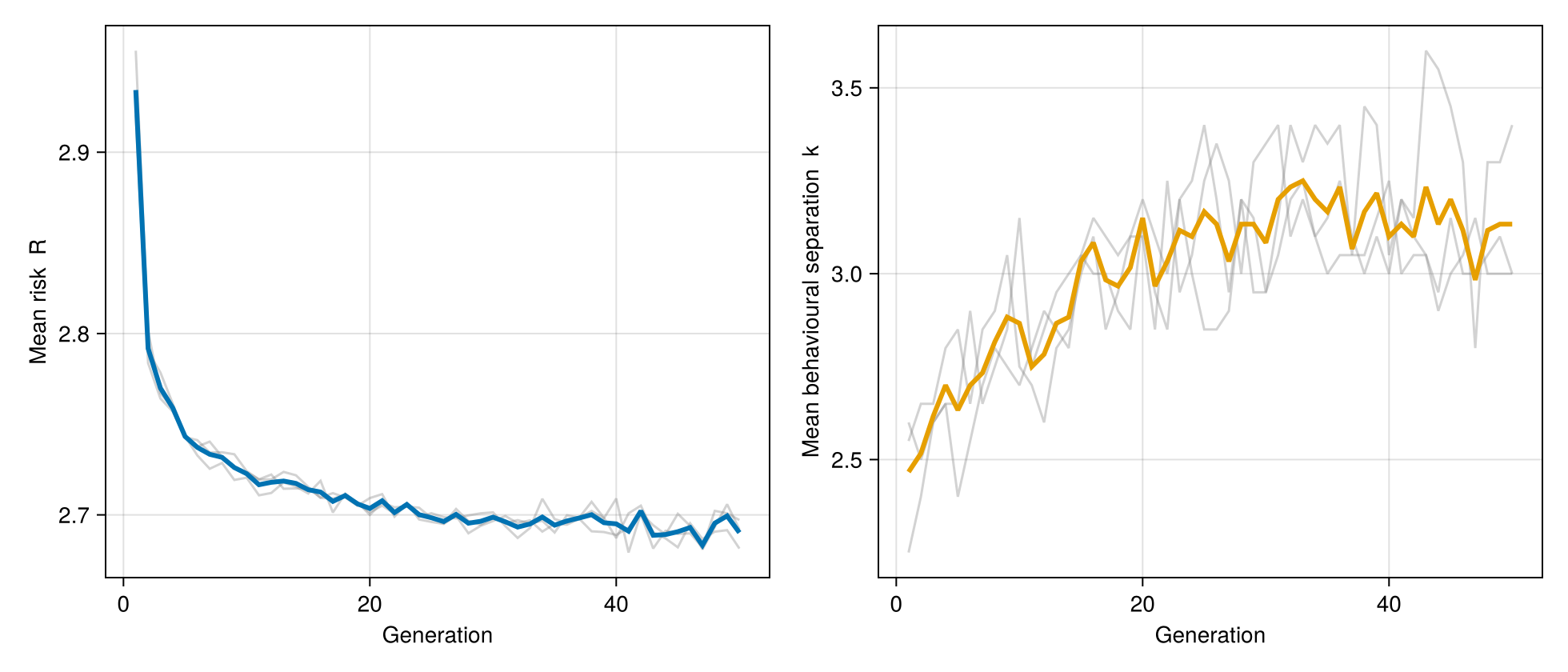
Large language models (LLMs) are increasingly used in settings where success depends on tracking conditions they have no direct access to, such as which language is being spoken, whether a claim is tr…
-
 Giulio Valentino Dalla Riva2026no date
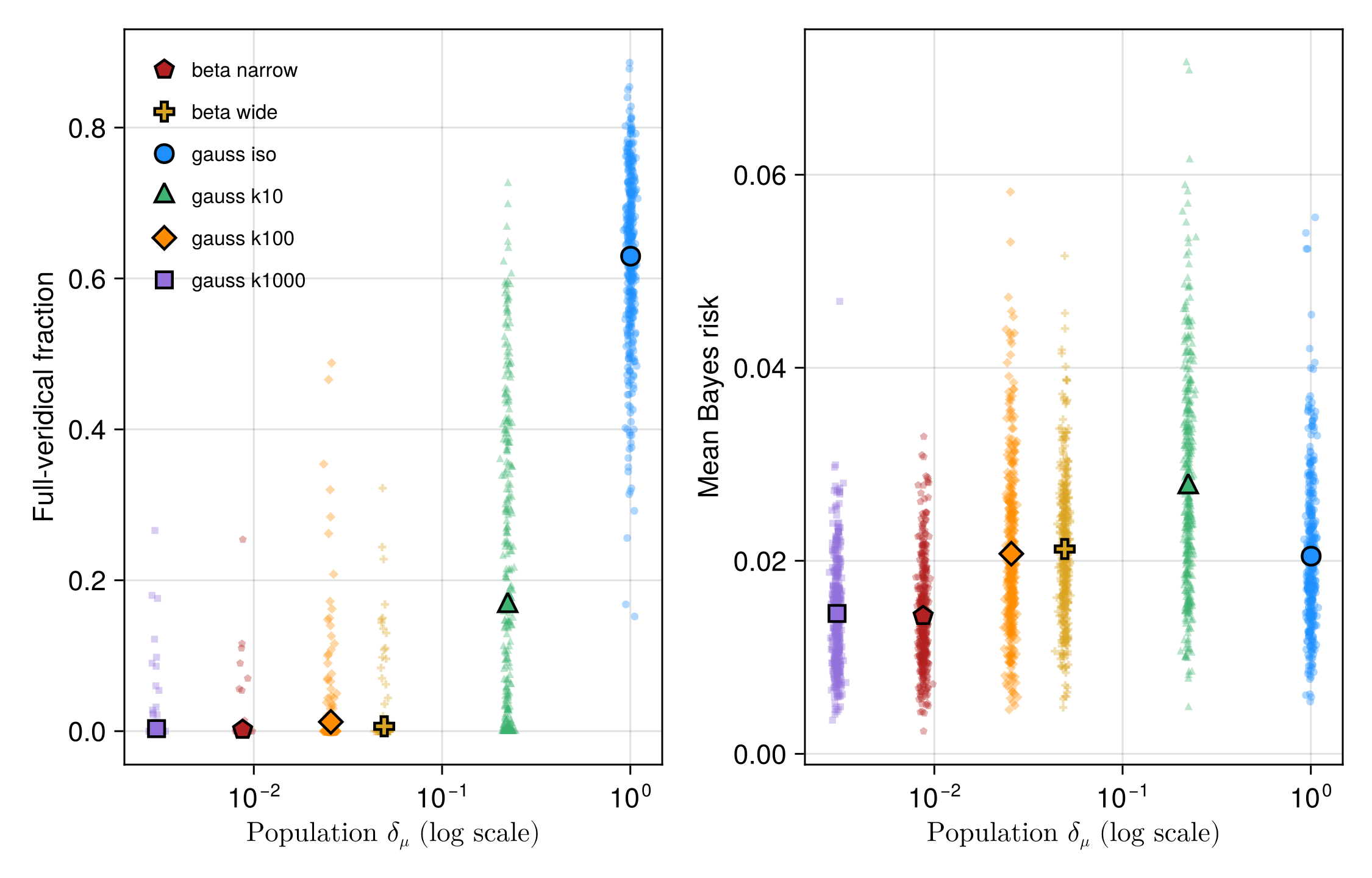
When does optimisation for performance yield representations that track world structure? We develop a mathematical theory of agents with a single fixed encoding shared across tasks, and use it to reso…
-
 Giulio Valentino Dalla Riva2026no date
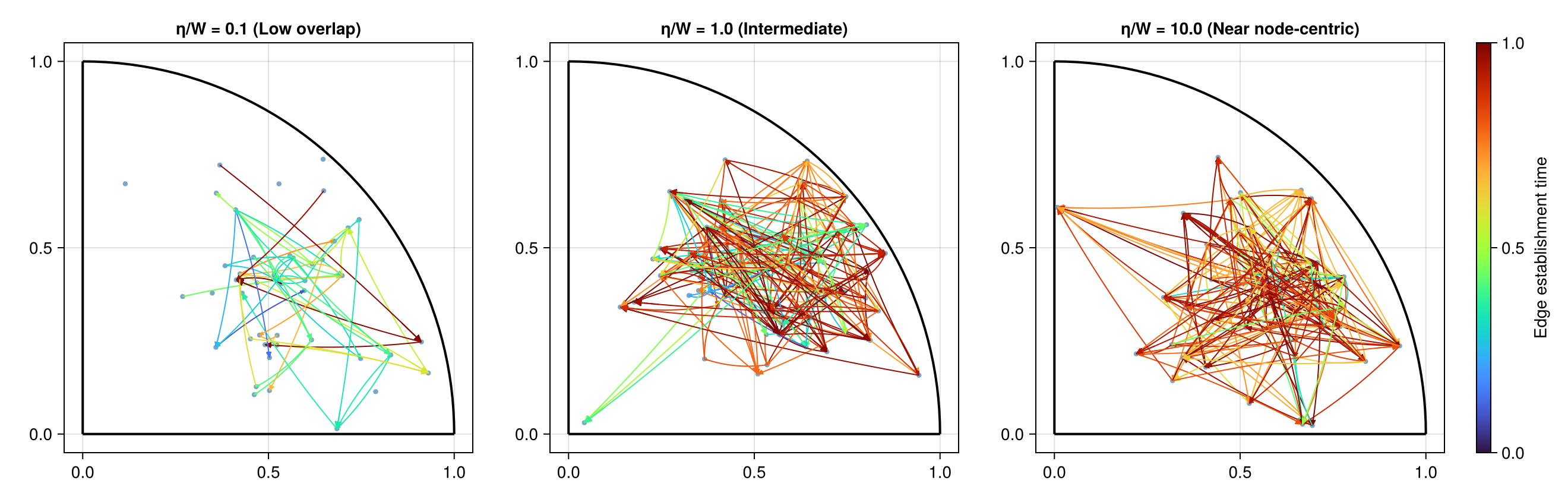
Latent-position random graph models usually treat the node set as fixed once the sample size is chosen, while graphon-based and random-measure constructions allow more randomness at the cost of weaker…
-
 P.-A. Absil2008no date
We adopt the metric quotient-manifold framework of Absil, Mahony, and Sepulchre as the geometric backbone for the principal bundle in Random Dot Product Graphs as Dynamical Systems: Limitations and Opportunities: their Riemannian connection on R*^{n x d}/O(d)…
-
 Joshua Cape2019no date
The two-to-infinity perturbation expansion underwrites the linearised error term we cite in Random Dot Product Graphs as Dynamical Systems: Limitations and Opportunities as the basis for treating ASE residuals as approximately mean-zero linear functionals of…
-
 Ian Gallagher2022no date
UASE appears in Random Dot Product Graphs as Dynamical Systems: Limitations and Opportunities as a joint embedding method whose generative assumptions are incompatible with ODE dynamics on latent positions, since it models time-varying activity against fixed…
-
 Keith Levin2022no date
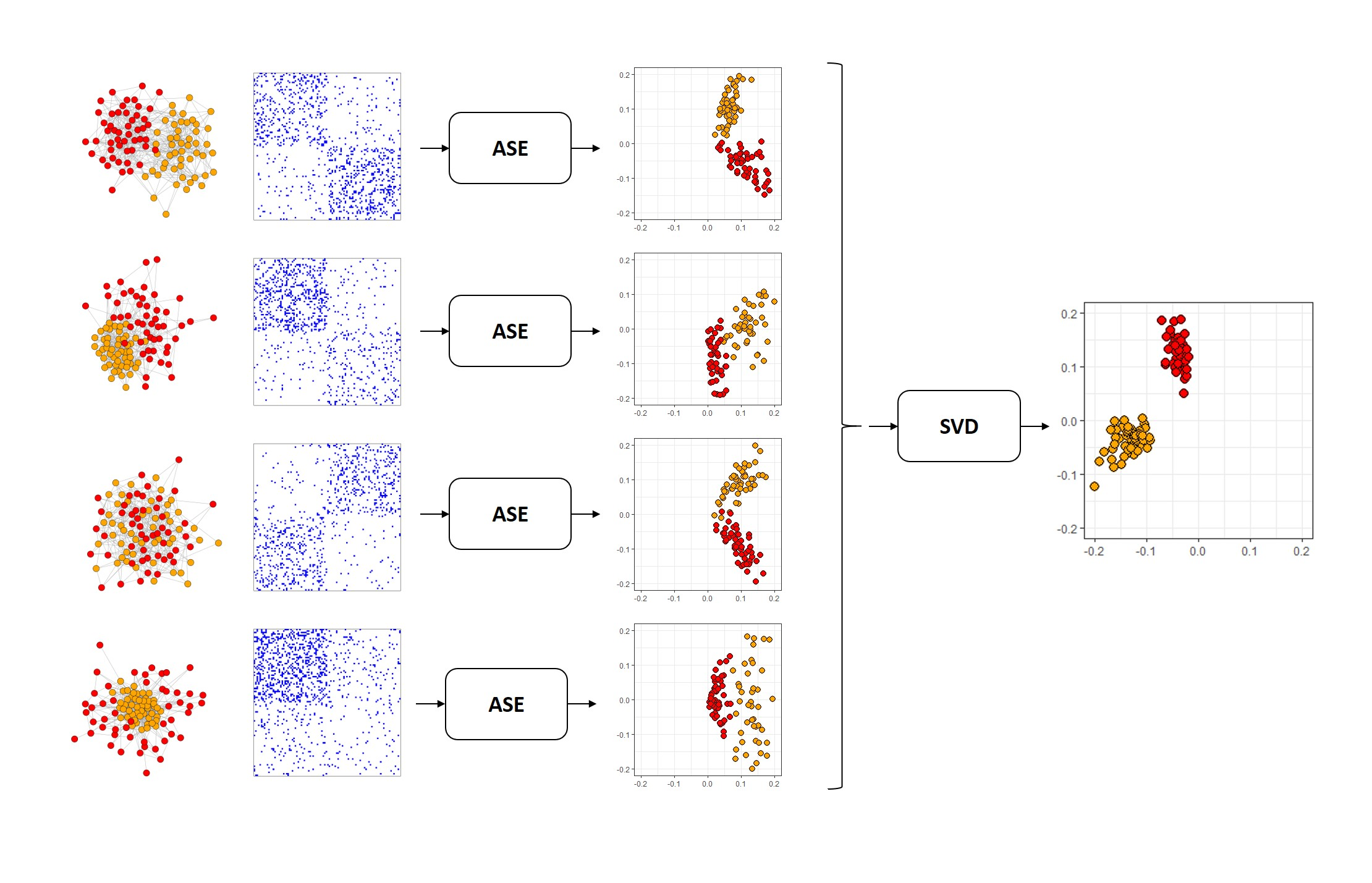
The Omnibus embedding is cited in Random Dot Product Graphs as Dynamical Systems: Limitations and Opportunities alongside UASE as an existing joint embedding approach that fails to address our obstructions, modeling activity over fixed identity rather than ge…
-
 Jesús Arroyo2021no date
We group COSIE with Omnibus and UASE as joint embedding methods that presuppose a shared invariant subspace across time slices; in Random Dot Product Graphs as Dynamical Systems: Limitations and Opportunities we argue that ODE-driven latent positions generall…
-
 Klaus-Jochen Engel2000no date
Cited in Intensity Dot Product Graphs for the theory of strongly continuous one-parameter semigroups, supplying the framework needed to ask whether the continuous Laplacian generates a heat semigroup on the…
-
 Jeff Cheeger1970no date
Referenced in Intensity Dot Product Graphs as the origin of the Cheeger inequality linking spectral gap to isoperimetric constants, motivating possible interpretations of the symmetric continuous Laplacian.
-
 Ronald R. Coifman2006no date
Cited in Intensity Dot Product Graphs to draw a parallel between the heat map and diffusion-map embeddings, suggesting their bound heat operator could yield embeddings of the latent domain where distances re…
-
 Alexander Grigor'yan2009no date
Cited in Intensity Dot Product Graphs as the analytic backdrop for heat kernels on manifolds and graphs, providing the tools the authors would extend to verify sectoriality and dissipativity of the continuou…
-
 Nicolás García Trillos2020no date
Cited in Intensity Dot Product Graphs alongside Hein et al. for quantitative spectral convergence rates of graph Laplacians toward the Laplace-Beltrami operator, signaling the kind of error estimates a direc…
-
 Matthias Hein2007no date
Cited in Intensity Dot Product Graphs as prior work on convergence of discrete graph Laplacians to continuous operators on random neighborhood graphs, flagged as the closest analogue for a future IDPG Laplac…
-
 Ulrike Luxburg2007no date
Cited in Intensity Dot Product Graphs to motivate asking whether singular functions of the bound heat operator reveal latent community structure in the intensity landscape, by analogy with how Laplacian eige…
-
 François Caron2017no date
Cited as the originating work on sparse exchangeable random-measure graphs, an alternative route to random vertex populations that Intensity Dot Product Graphs contrasts with its own Euclidean, dot-product l…
-
 Victor Veitch2015no date
Cited alongside Caron and Fox for the graphex class of sparse exchangeable graphs from random measures, which Intensity Dot Product Graphs flags as lacking the explicit finite-dimensional latent geometry tha…
-
 Christian Borgs2019no date
Cited in Intensity Dot Product Graphs as the L^p extension of graphon theory that handles sparse graphs, contextualizing IDPG's own dense-to-sparse interpolation as an alternative route through Poisson lifet…
-
 Christian Borgs2008no date
Paired with Lovasz to ground the digraphon and graph-limit framework that Intensity Dot Product Graphs compares with, particularly the cut-metric machinery underlying the regularity-obstruction theorems for…
-
 László Lovász2012no date
Cited as the standard reference for graphon theory, against which Intensity Dot Product Graphs later proves a dimensional obstruction: the one-dimensional label space of Lovasz-style graphons cannot faithful…
-
 Hermann Weyl1912no date
Cited in Intensity Dot Product Graphs for Weyl's inequality on singular value perturbations, used both to bound spectral differences between operators and to control Bernoulli noise in the adjacency-to-desir…
-
 Tosio Kato1995no date
Kato's perturbation theory underwrites the small-mutation expansion in Between interface and truth: Multi-task selection drives ecologically veridical perception, giving the analytic first-order correction to the dominant Perron eigenvector around the unperturbed diagon…