Recently updated notes
-
 Chetan Prakash2020no date
Prakash and colleagues proved that single-task payoff functions generically fail to preserve total orders, group structures, and measurable spaces. Between interface and truth: Multi-task selection drives ecologically veridical perception uses this no-preservation resul…
-
 Jeong-Man Park2010no date
We cite Park, Munoz, and Deem in Between interface and truth: Multi-task selection drives ecologically veridical perception both to situate our frequency-independent recursion within quasispecies theory and to acknowledge that real populations are finite and stochastic,…
-
 Andreas Maurer2016no date
Maurer, Pontil, and Romera-Paredes derived finite-sample excess-risk bounds for multi-task representation learning. We carry their shared-representation insight into Between interface and truth: Multi-task selection drives ecologically veridical perception and recast it…
-
 Wassily Hoeffding1963no date
We use Hoeffding's inequality in Between interface and truth: Multi-task selection drives ecologically veridical perception to bound the deviation of empirical from population Bayes risk, yielding, together with a union bound over encodings, a polynomial-in-N sample com…
-
 Anne Greenbaum2020no date
We rely in Between interface and truth: Multi-task selection drives ecologically veridical perception on Greenbaum, Li, and Overton for two ingredients: the first-order analytic perturbation of the simple Perron eigenpair around the diagonal fitness matrix, and the Baue…
-
 Steven A. Frank2025no date
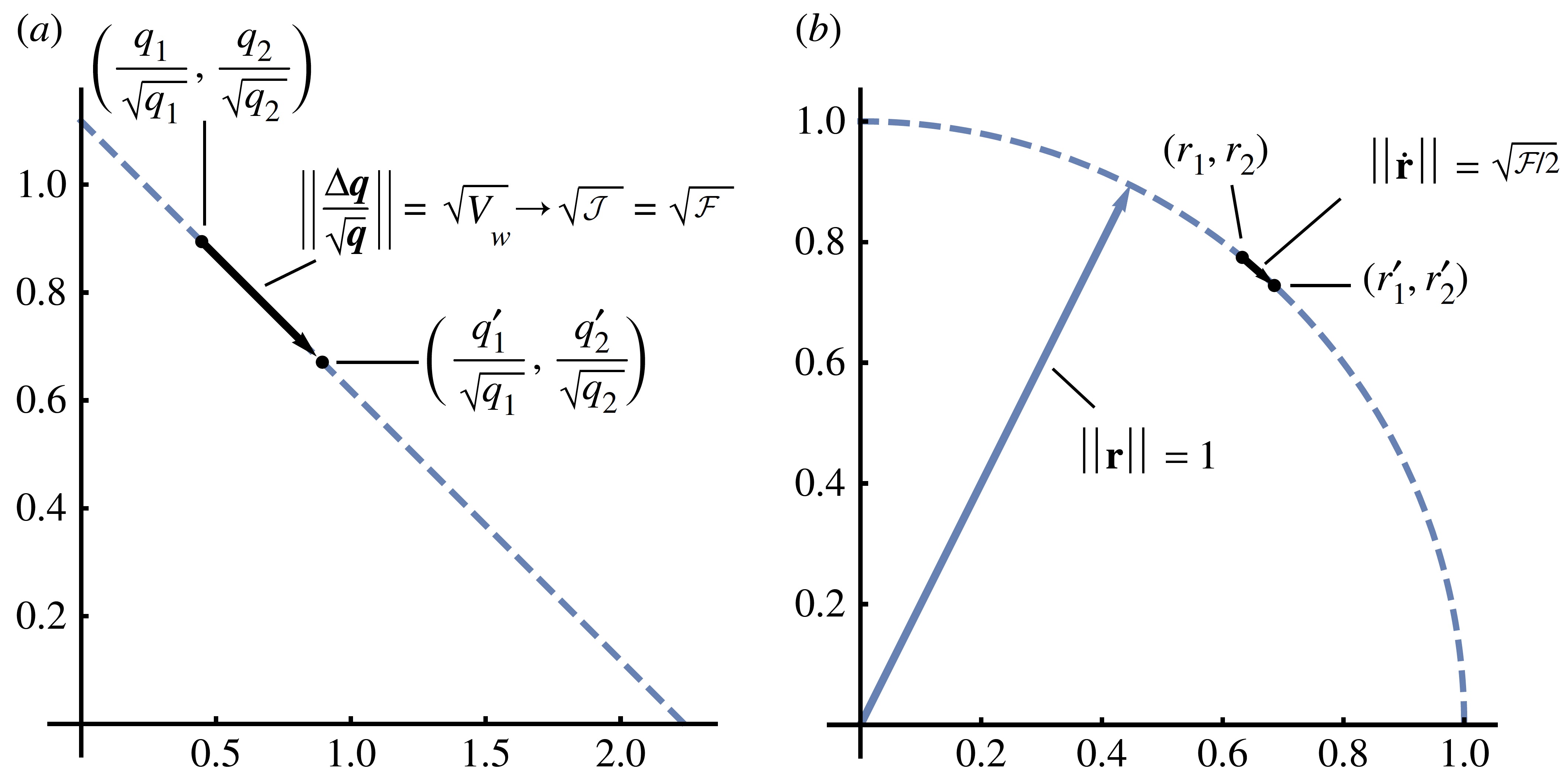
Frank's force-metric-bias decomposition of the Price equation provides the conceptual bridge sketched in Between interface and truth: Multi-task selection drives ecologically veridical perception between evolutionary dynamics and algorithmic learning, with our Appendix…
-
 Manfred Eigen1971no date
We frame our deterministic recursion in Between interface and truth: Multi-task selection drives ecologically veridical perception as the frequency-independent quasispecies setting introduced by Eigen, where expected fitness depends on the encoding alone and the replica…
-
 Marlene D. Berke2022no date
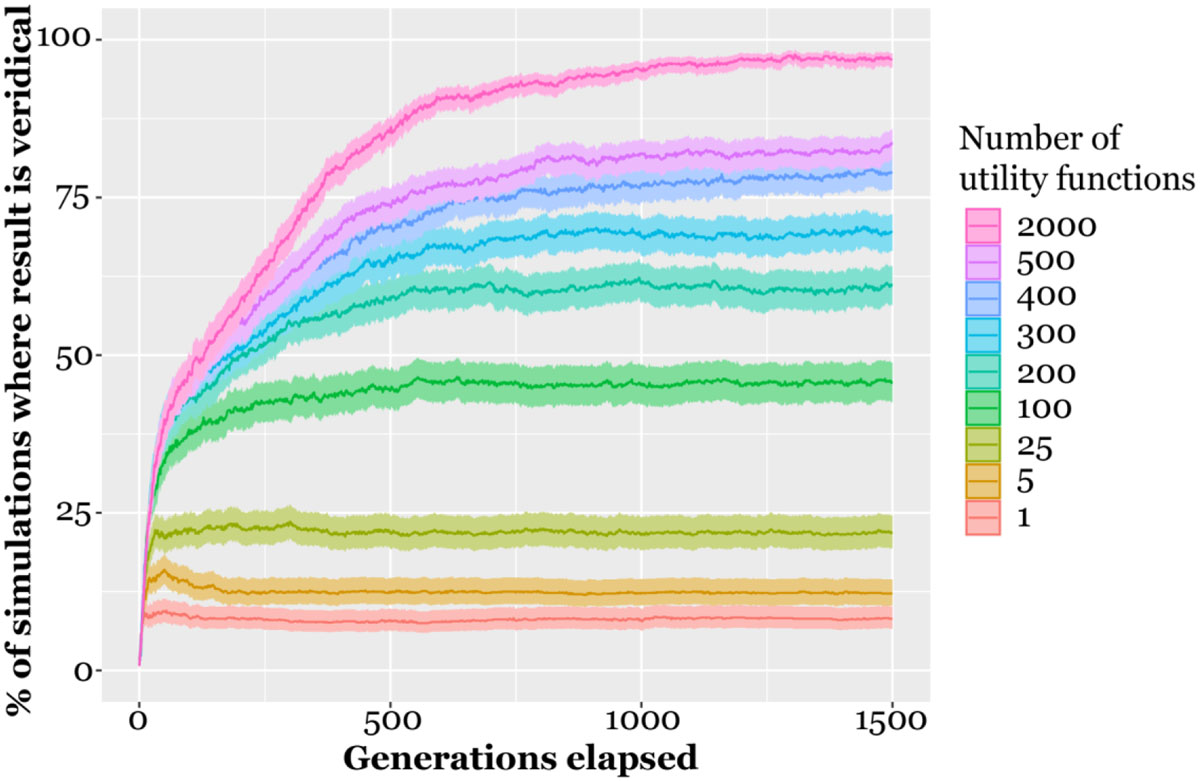
Berke and colleagues showed by simulation that cognitively impenetrable encodings facing many tasks favour veridical perception, and called for mathematical models. We answer that call in Between interface and truth: Multi-task selection drives ecologically veridical perception…
-
 Jonathan Baxter2000no date
We adapt in Between interface and truth: Multi-task selection drives ecologically veridical perception Baxter's analysis of inductive bias learning, where shared representations across related tasks improve sample complexity, porting that statistical-learning insight in…
-
 Jacob Andreas2022no date
Andreas's argument that language models can be read as agent models is cited in Task ecologies and the evolution of world-tracking representations in large language models as part of the recent debate over whether ML systems represent their targets in any substantive sense.
-
 Dimitri Coelho Mollo2025no date
Paired with Sullivan on the vector grounding problem; Task ecologies and the evolution of world-tracking representations in large language models reframes that grounding worry as a question about which world-state distinctions a sufficient encoding must preserve.
-
 Naftali Tishby1999no date
We position Task ecologies and the evolution of world-tracking representations in large language models as a specialization of the information bottleneck's compress-while-preserving-prediction tradeoff to the autoregressive ecology-relative setting.
-
 Kevin Laland2016no date
Task ecologies and the evolution of world-tracking representations in large language models invokes Laland and colleagues to frame model-generated text re-entering training corpora as a niche-construction problem, where future ecologies are reshaped by the very models adapti…
-
 Geoffrey E. Hinton1987no date
Hinton and Nowlan are cited alongside Baldwin in Between interface and truth: Multi-task selection drives ecologically veridical perception to delimit how lifetime learning interacts with our static optimality results: learned encodings shape evolutionary trajectories o…
-
 James Mark Baldwin1896no date
We invoke the Baldwin effect in Between interface and truth: Multi-task selection drives ecologically veridical perception to clarify the scope of within-lifetime learning: developmental optimisation of an encoding does not replace evolutionary convergence, it can accel…
-
 Barton L. Anderson2015no date
Anderson identified the logical gap in interface theory by arguing that organisms must adjust behaviour across multiple homeostatic demands within ontogenetic time. We take his philosophical critique…
-
 Chetan Prakash2021no date
Prakash et al.'s simulation work showing that fitness-tuned interfaces dominate veridical encodings under broad conditions is treated in Between interface and truth: Multi-task selection drives ecologically veridical perception as the empirical backbone of the FBT case…
-
 Donald D. Hoffman2012no date
Hoffman and Singh raised the multi-task question explicitly and conjectured that general-purpose encodings would not become more veridical with more tasks, calling for detailed mathematical models. Between interface and truth: Multi-task selection drives ecologically veridical perception…
-
 Evan Hubinger2024no date
Cited as precedent for studying small transformers as model organisms in Task ecologies and the evolution of world-tracking representations in large language models, legitimating the microgpt experimental strategy that anchors the empirical claims.
-
 Emily Sullivan2024no date
Cited for the question of whether ML models represent their targets at all; in Task ecologies and the evolution of world-tracking representations in large language models we reply with a determinate criterion of ecological veridicality grounded in next-token sufficiency.
-
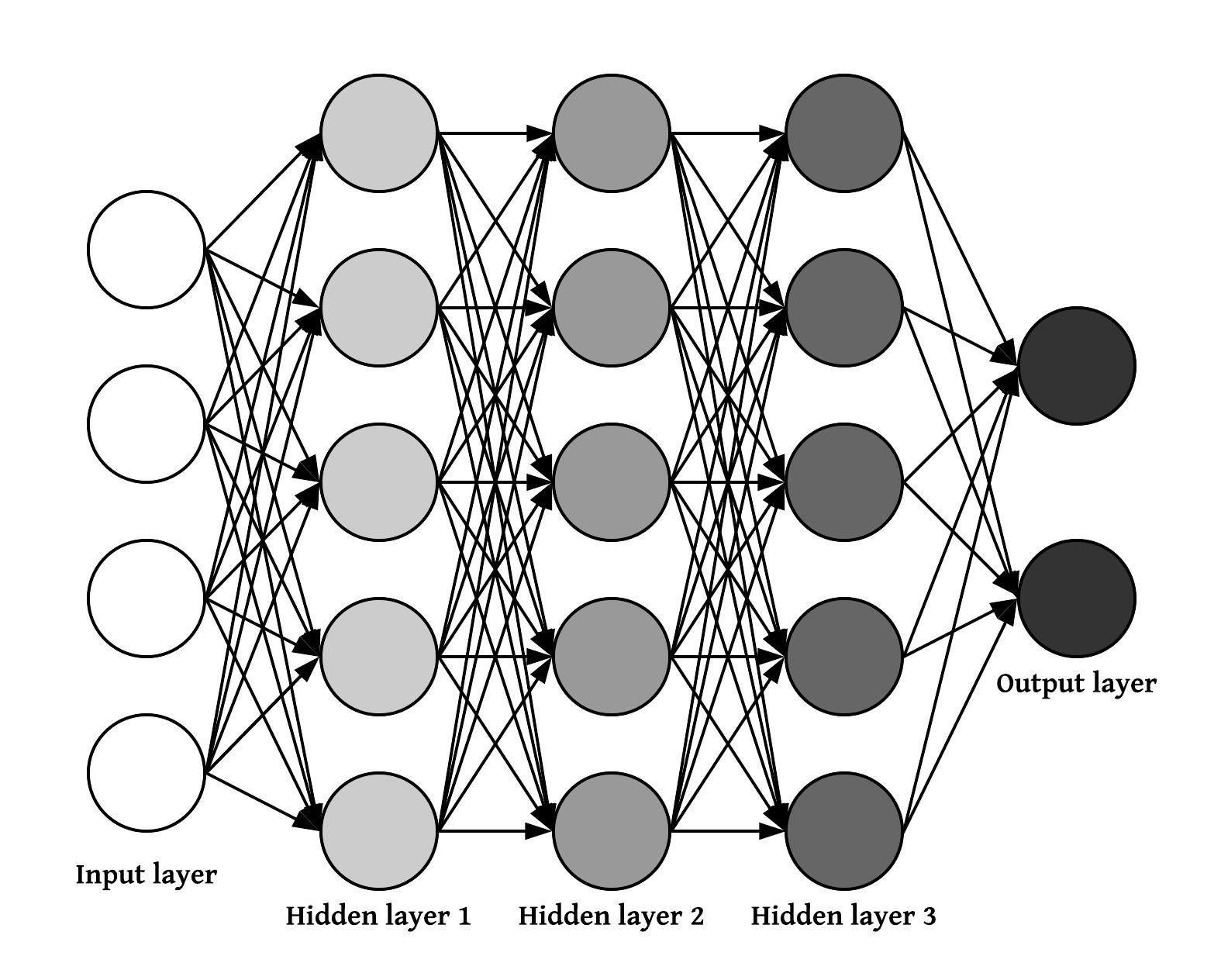 Emily Sullivan2022no date
Sullivan's account of understanding from machine-learning models is invoked in Task ecologies and the evolution of world-tracking representations in large language models to flag the richer philosophical questions our thin operationalization deliberately sets aside.
-
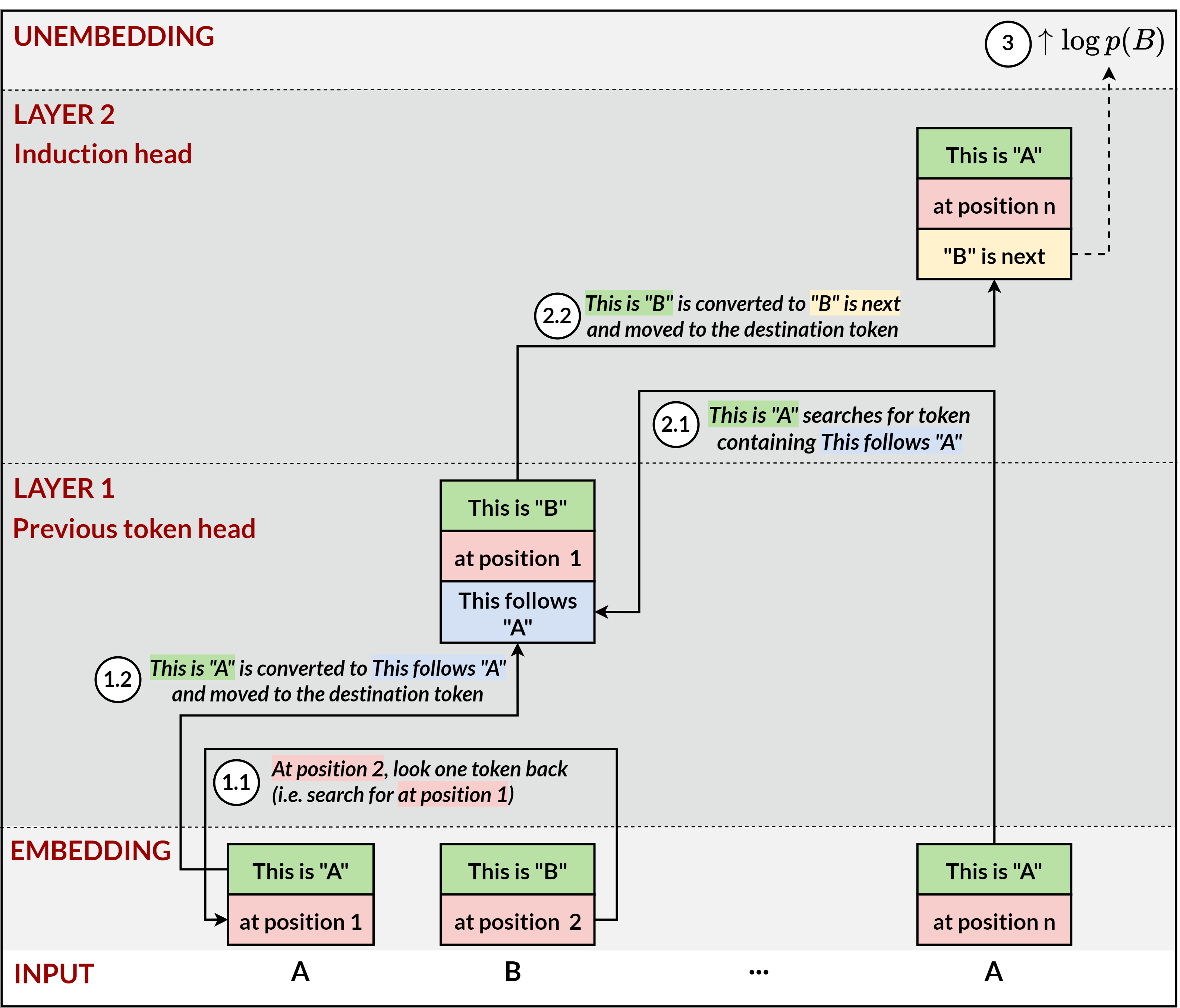 Cameron Buckner2024no date
Cited in Task ecologies and the evolution of world-tracking representations in large language models as a philosophical map of language-model debates that frames the representation question we then sharpen via classical sufficiency.
-
 Emily M. Bender2020no date
Cited in Task ecologies and the evolution of world-tracking representations in large language models among the skeptical positions on whether form-only training can yield meaning, marking one pole of the understanding debate that the sufficiency framework reframes in encodin…
-
 Donald D. Hoffman2015no date
Hoffman, Singh, and Prakash's Fitness-Beats-Truth theorem is the target our analysis in Between interface and truth: Multi-task selection drives ecologically veridical perception reformulates: we embed its single-task result inside a multi-task framework where ecologica…
-
 Giulio Valentino Dalla Riva2026no date
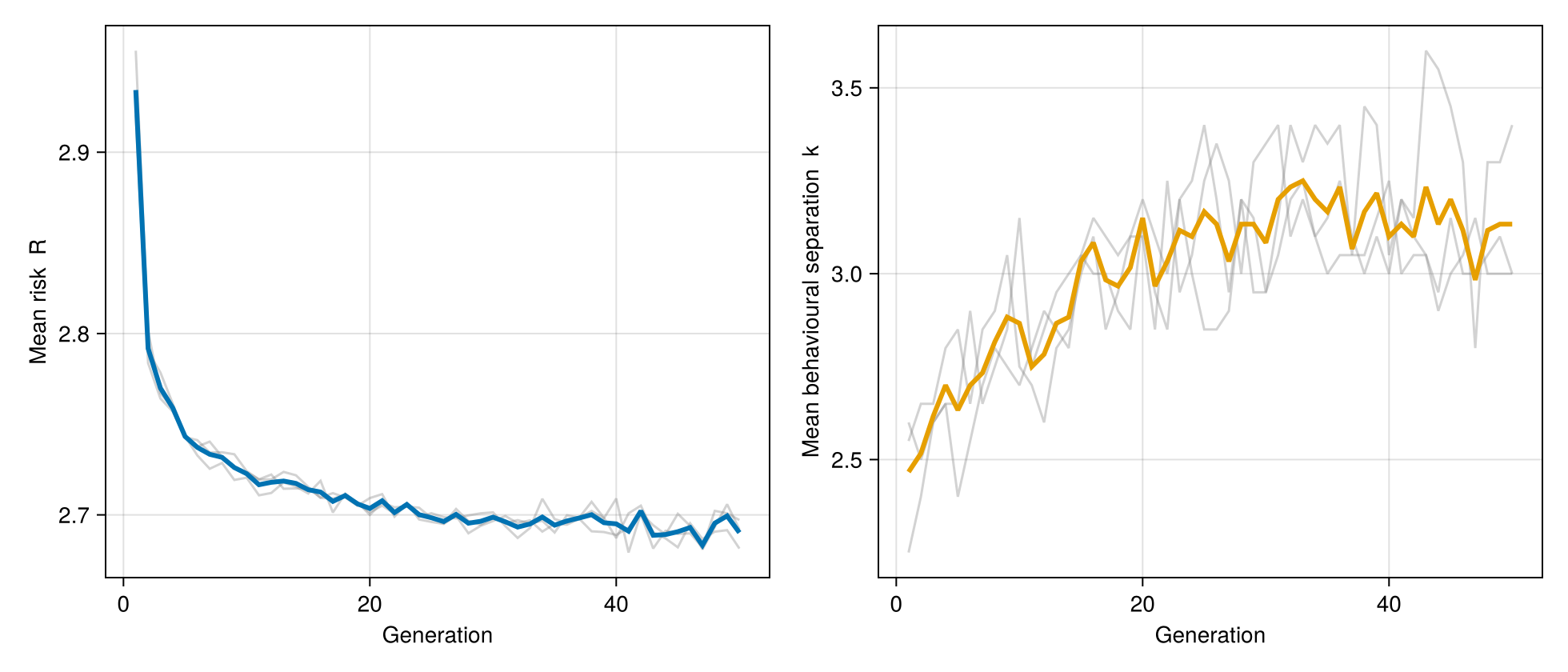
Large language models (LLMs) are increasingly used in settings where success depends on tracking conditions they have no direct access to, such as which language is being spoken, whether a claim is tr…
-
 Giulio Valentino Dalla Riva2026no date
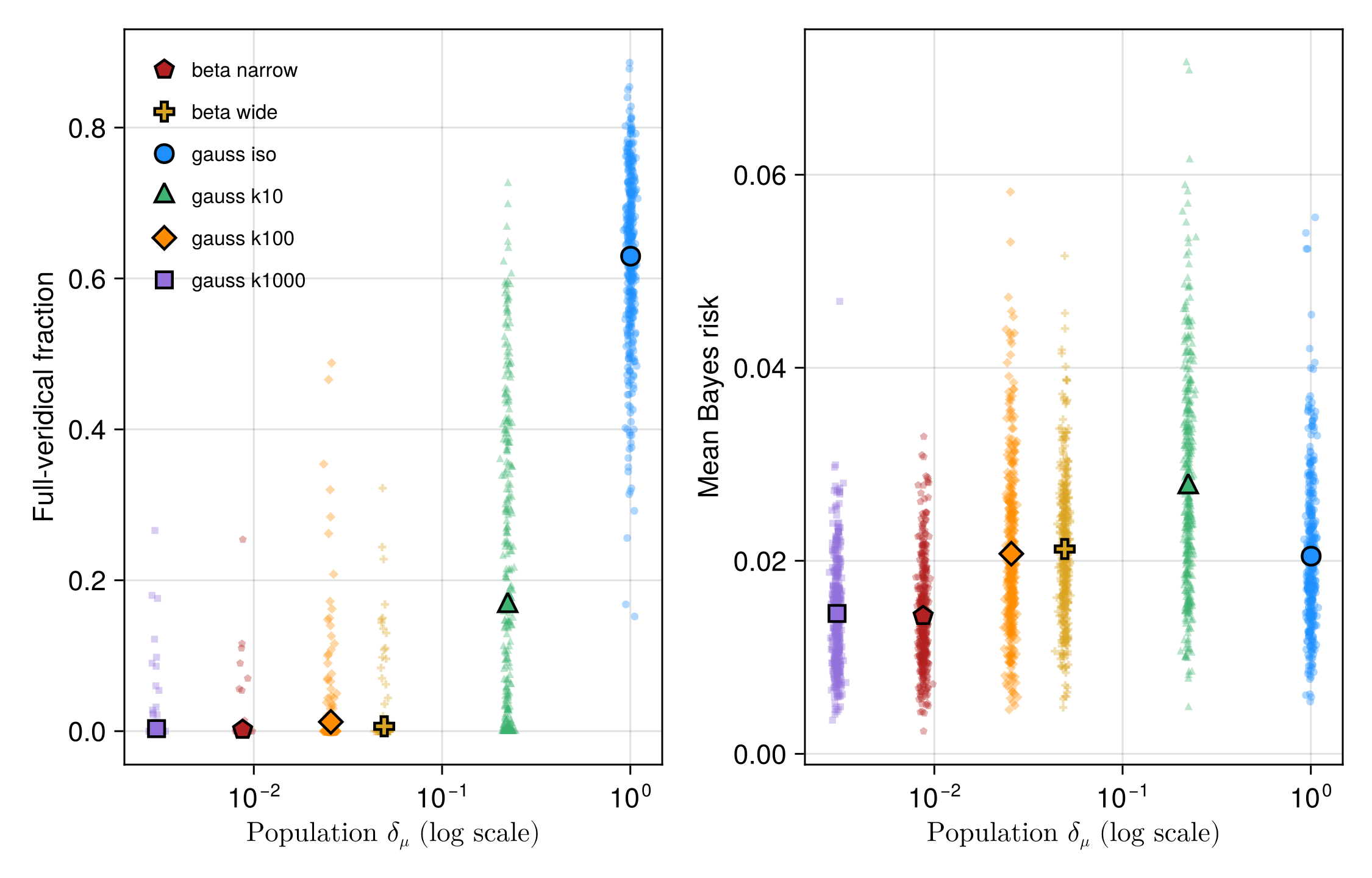
When does optimisation for performance yield representations that track world structure? We develop a mathematical theory of agents with a single fixed encoding shared across tasks, and use it to reso…
-
 Giulio Valentino Dalla Riva2026no date
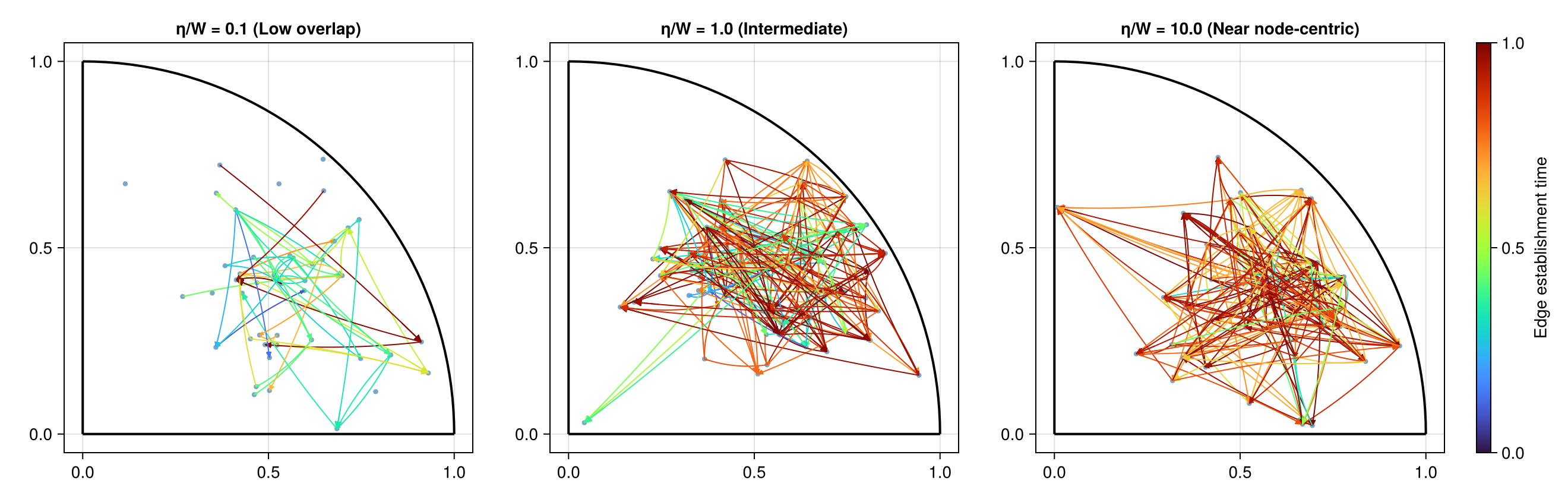
Latent-position random graph models usually treat the node set as fixed once the sample size is chosen, while graphon-based and random-measure constructions allow more randomness at the cost of weaker…
-
 Joshua Cape2019no date
The two-to-infinity perturbation expansion underwrites the linearised error term we cite in Random Dot Product Graphs as Dynamical Systems: Limitations and Opportunities as the basis for treating ASE residuals as approximately mean-zero linear functionals of…
-
 Ian Gallagher2022no date
UASE appears in Random Dot Product Graphs as Dynamical Systems: Limitations and Opportunities as a joint embedding method whose generative assumptions are incompatible with ODE dynamics on latent positions, since it models time-varying activity against fixed…
-
 Keith Levin2022no date
The Omnibus embedding is cited in Random Dot Product Graphs as Dynamical Systems: Limitations and Opportunities alongside UASE as an existing joint embedding approach that fails to address our obstructions, modeling activity over fixed identity rather than ge…