Recently updated notes
-
 Alessandro Achille2018no date
Their minimal sufficient invariant representation is the closest analogue to our ecology-relative quotient, and Task ecologies and the evolution of world-tracking representations in large language models uses their Proposition 3.1 to mark where conditioning on context (rathe…
-
 Subhashis Ghosal2000no date
Posterior concentration results are listed in Task ecologies and the evolution of world-tracking representations in large language models among plausible routes for bridging Bayes-optimal targets to SGD-trained representations, a gap left to future work.
-
 Andrew M. Saxe2019no date
Their caveats about the descriptive reach of the IB principle in deep learning temper the scope under which Task ecologies and the evolution of world-tracking representations in large language models applies its bottleneck-style reasoning.
-
 Ziv Goldfeld2020no date
We cite this survey in Task ecologies and the evolution of world-tracking representations in large language models to point readers to the current state of information bottleneck theory rather than recapitulate it ourselves.
-
 Noam Slonim2000no date
The agglomerative information bottleneck supplies a greedy partition-merging algorithm for discrete state spaces that prefigures the partition-level objects Task ecologies and the evolution of world-tracking representations in large language models identifies as minimal suff…
-
 D. J. Strouse2017no date
The deterministic information bottleneck shares our restriction to deterministic encodings, and Task ecologies and the evolution of world-tracking representations in large language models inherits that constraint while adding the ecology-relative quotient structure.
-
 Ohad Shamir2010no date
Their finite-sample IB learning bounds are cited in Task ecologies and the evolution of world-tracking representations in large language models as a more realistic counterpart to our finite-class certification result, which now lives in the appendix.
-
 E. L. Lehmann1950no date
We cite the classical sufficiency literature to anchor the equivalence between zero excess loss and statistical sufficiency for the next token, supplying Task ecologies and the evolution of world-tracking representations in large language models with its rigorous statistical…
-
 Raghu Raj Bahadur1954no date
Paired with Lehmann and Scheffe to ground the sufficiency notion used throughout Task ecologies and the evolution of world-tracking representations in large language models, where the conditional insufficiency term in the loss decomposition inherits its meaning from this cla…
-
 Maxwell Nye2021no date
Paired with the chain-of-thought citation in Task ecologies and the evolution of world-tracking representations in large language models, scratchpads exemplify intermediate-token procedures that close the deployment decoding gap without enlarging the frozen separation set. T…
-
 Jason Wei2022no date
Task ecologies and the evolution of world-tracking representations in large language models cites chain-of-thought prompting as a deployment-time procedure that creates longer informative contexts and improves performance within a frozen model, while leaving the underlying s…
-
 Daniele Gambetta2025no date
Cited in Task ecologies and the evolution of world-tracking representations in large language models as concrete evidence for the niche-construction feedback loop: surplexity work documents performance and diversity decay across generations when later models train on synthet…
-
 Andrés Páez2024no date
Paired with Hubinger et al. to support the use of toy surrogate models for theoretical inquiry; Task ecologies and the evolution of world-tracking representations in large language models adopts that methodology so every theoretically relevant quantity remains directly obser…
-
 Melanie Mitchell2023no date
We invoke their survey of the understanding debate to situate Task ecologies and the evolution of world-tracking representations in large language models within an ongoing methodological disagreement, then sidestep the philosophical impasse by isolating the parts that admit…
-
 Bin Wang2025no date
Their proof of approximately orthogonal latent-variable representations at global minima of feedforward networks is cited in Task ecologies and the evolution of world-tracking representations in large language models as a parallel structural result for a different architectu…
-
 Jack Lindsey2025no date
Task ecologies and the evolution of world-tracking representations in large language models uses Lindsey's introspection results to flag a weaker individual-level analogue of niche construction, where computational states a model can detect may themselves enter the effective…
-
 Wes Gurnee2025no date
Their finding that next-token training induces low-dimensional internal geometry for structural variables gives Task ecologies and the evolution of world-tracking representations in large language models an empirical counterpart to its topological convergence prediction.
-
 Nelson Elhage2022no date
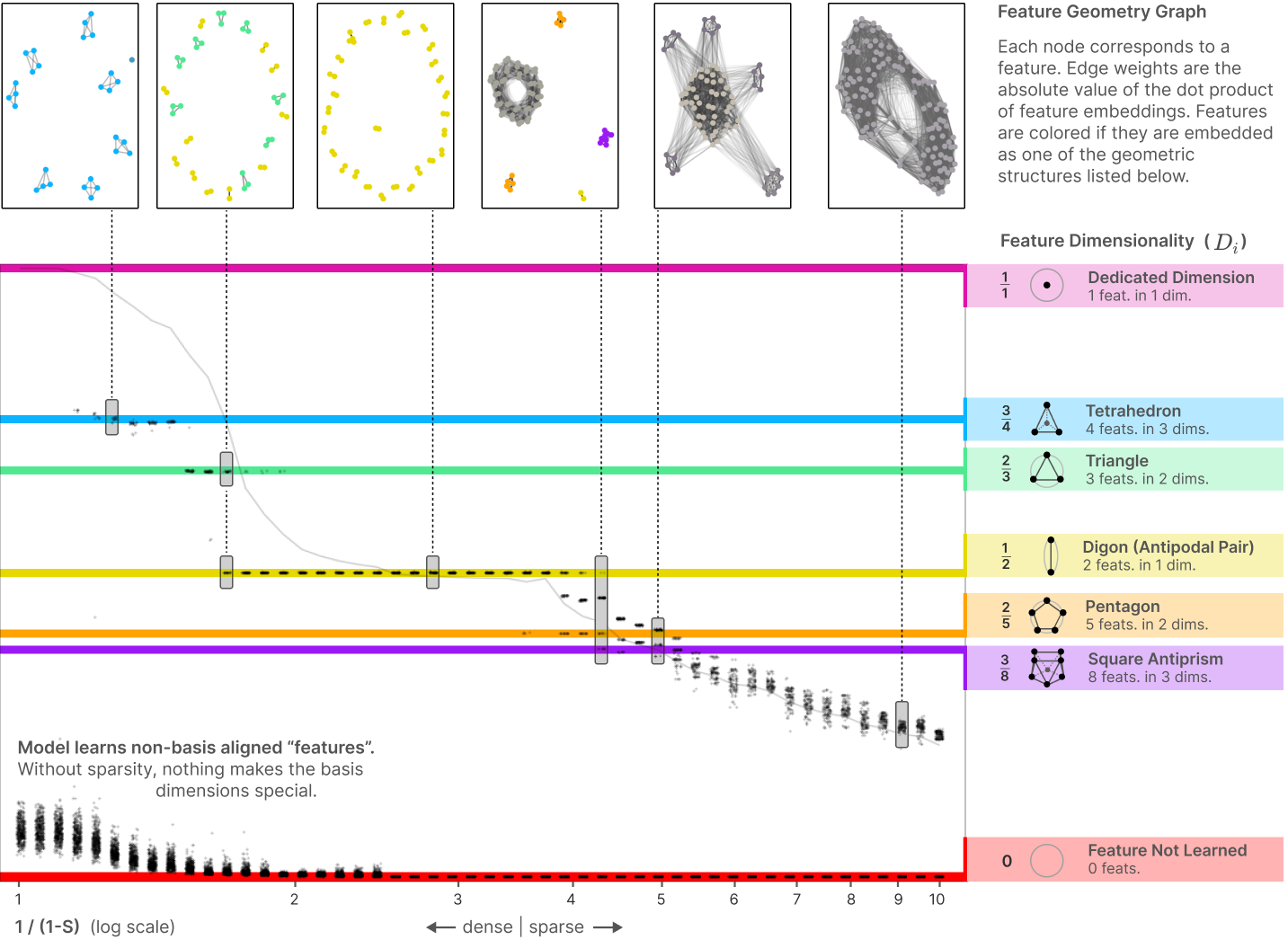
Toy Models of Superposition is cited in Task ecologies and the evolution of world-tracking representations in large language models together with the circuits framework to mark the mechanistic interpretability tradition our ecology-level account aims to complement.
-
 Nelson Elhage2021no date
The mathematical framework for transformer circuits identifies architectural structure in trained transformers, and Task ecologies and the evolution of world-tracking representations in large language models complements it by characterizing which structure is loss-forced by…
-
 Alexander Lobashev2025no date
Lobashev's Bayesian route to convergence, which attributes failure mainly to capacity mismatch, is set in Task ecologies and the evolution of world-tracking representations in large language models alongside other accounts of when models converge to a shared representation.
-
 Andrej Karpathy2026no date
Task ecologies and the evolution of world-tracking representations in large language models adopts Karpathy's microgpt as the architectural template for its laboratory model organism, picking it because the small frozen autoregressive transformer permits direct enumeration o…
-
 Minyoung Huh2024no date
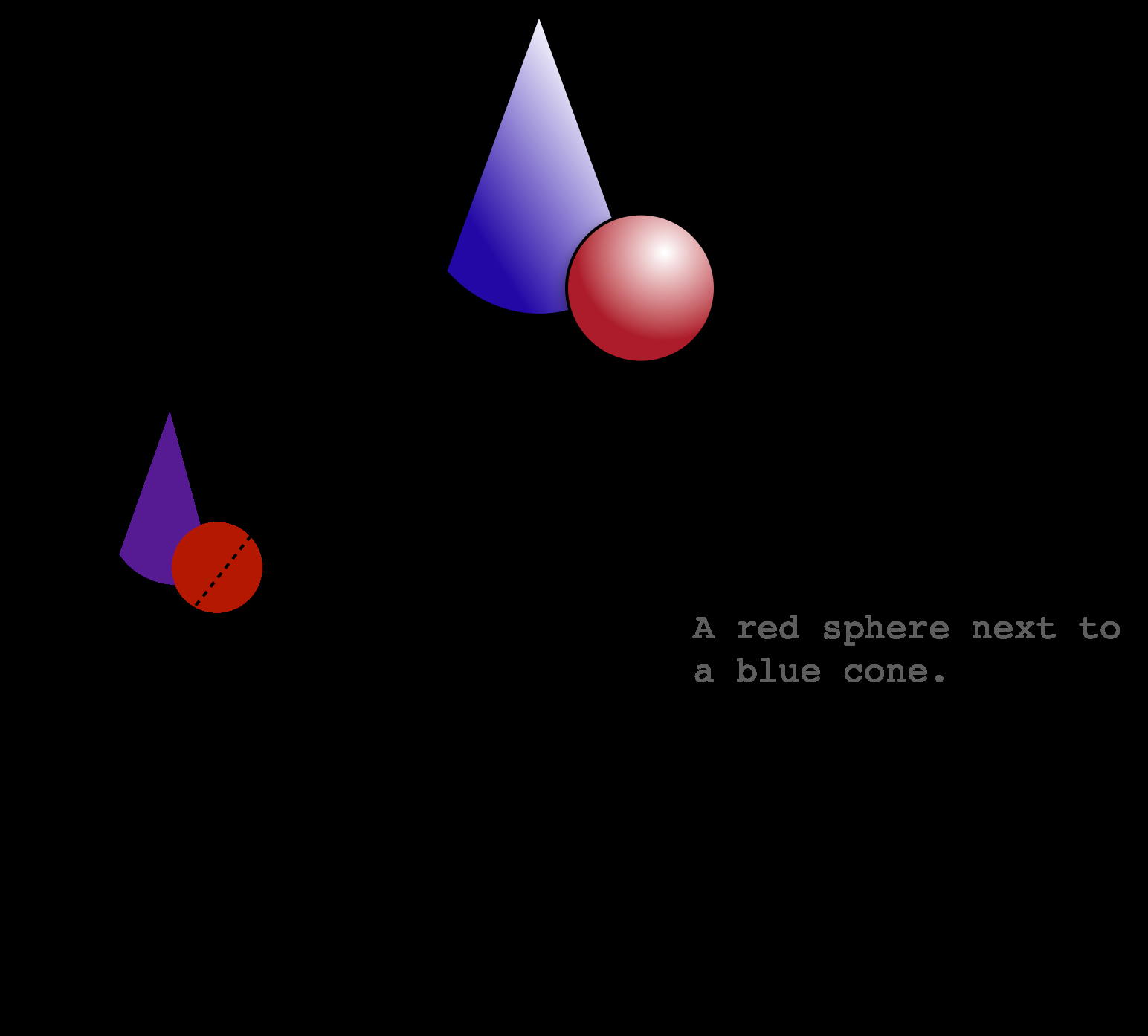
We cite this as one of the entries to the debate over whether language models develop internal structure that tracks the world, framing the empirical question that Task ecologies and the evolution of world-tracking representations in large language models answers with a suff…
-
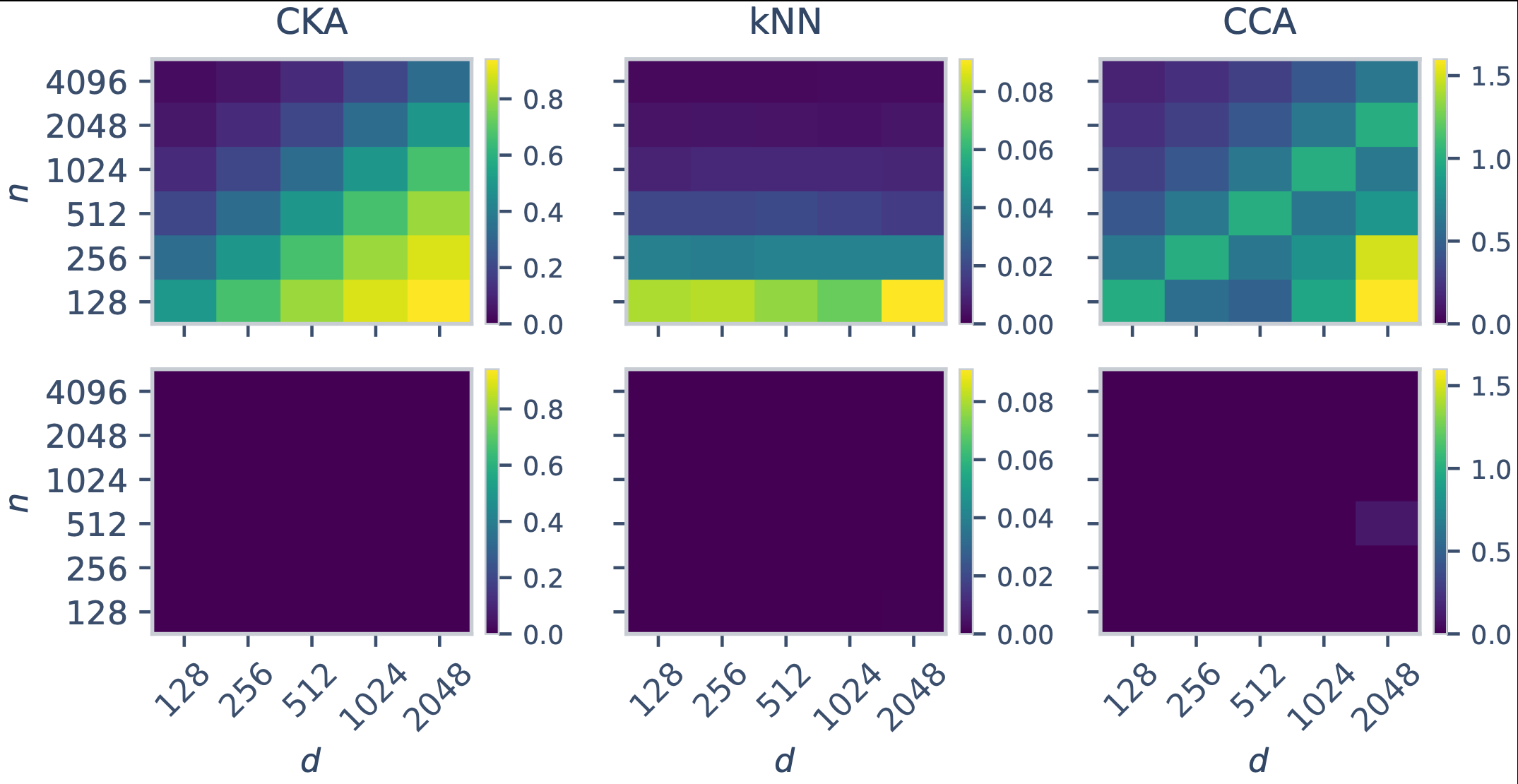 Fabian Gröger2026no date
Paired with Huh et al. as evidence that the world-tracking question is live; in Task ecologies and the evolution of world-tracking representations in large language models we use it to motivate the move from observed representational convergence to its information-theoretic…
-
 Alexandru Damian2022no date
Cited in Task ecologies and the evolution of world-tracking representations in large language models as part of the feature-learning theory we point to when sketching how SGD might reach the partitions our static theorems characterize.
-
 Blaise Arcas2022no date
Listed alongside Bender and Koller as a contrasting voice in the understanding debate; in Task ecologies and the evolution of world-tracking representations in large language models we use the cluster to mark the terrain that the ecological-veridicality argument cuts across.
-
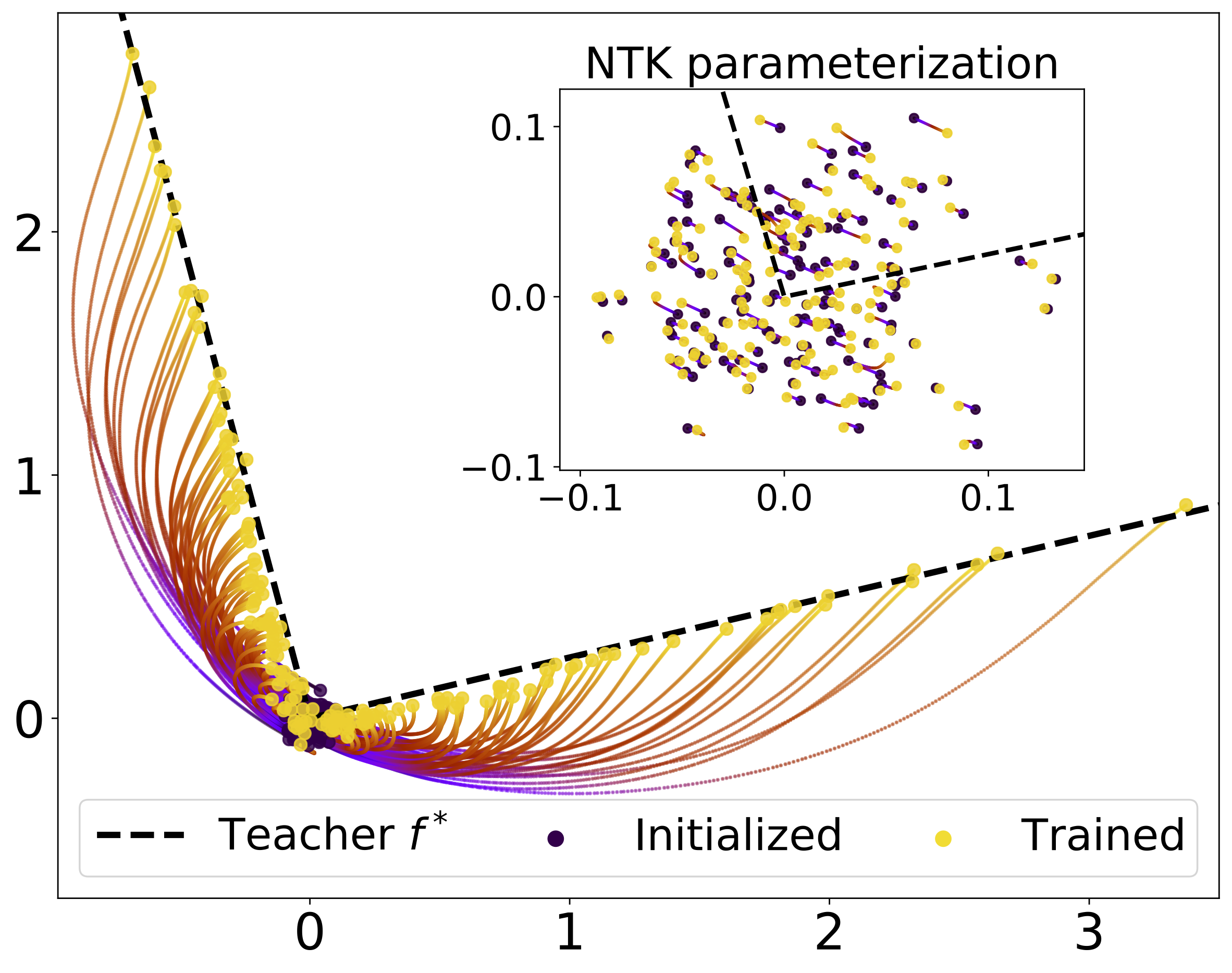 Jimmy Ba2022no date
Their high-dimensional analysis of feature learning after one gradient step is cited in Task ecologies and the evolution of world-tracking representations in large language models as a possible ingredient for resolving the oracle-to-trained gap.
-
 Alexander Atanasov2022no date
The silent alignment result is grouped in Task ecologies and the evolution of world-tracking representations in large language models with other feature-learning analyses that could plausibly bridge optimization dynamics to the ecology-relative target.
-
 George R. Price1972no date
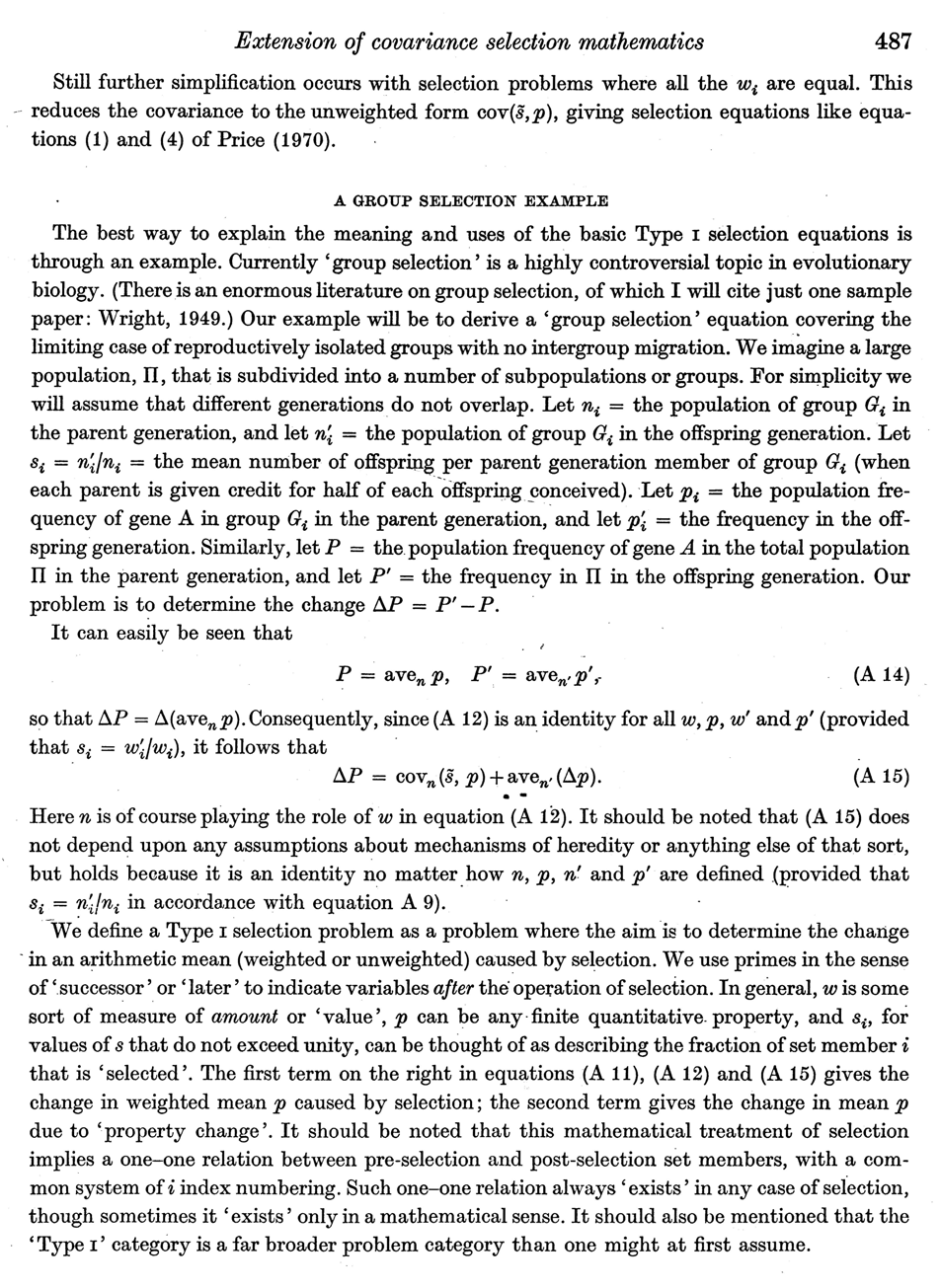
We pair Price's 1972 extension with his 1970 paper throughout the Price-equation derivation in Between interface and truth: Multi-task selection drives ecologically veridical perception, using it as the standard reference for the covariance-plus-transmission identity th…
-
 George R. Price1970no date
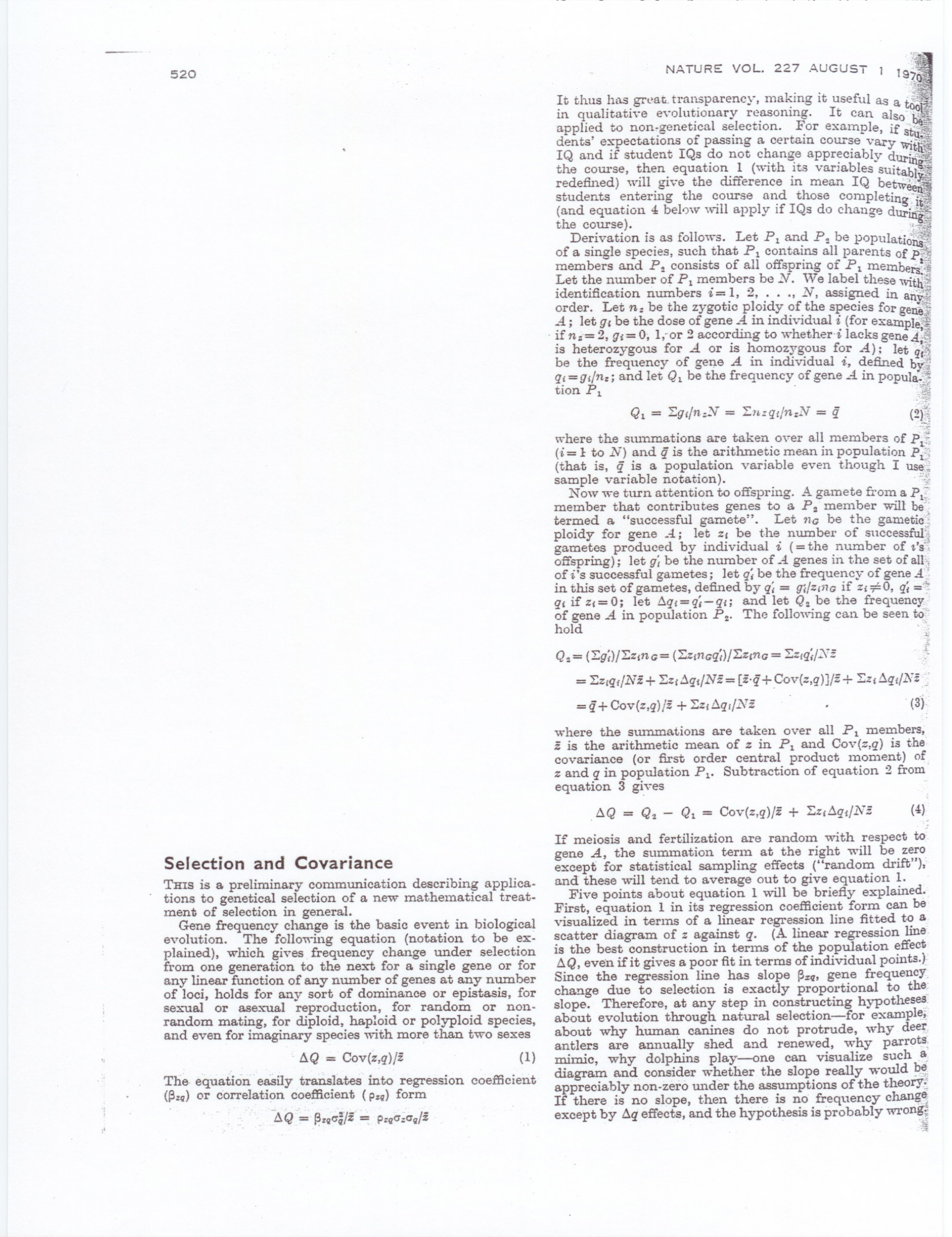
Price's 1970 covariance identity is the starting point for the one-generation decomposition we apply in Between interface and truth: Multi-task selection drives ecologically veridical perception, partitioning change in any encoding trait into a selection covariance with…
-
 Zenon W. Pylyshyn1999no date
Pylyshyn's cognitive impenetrability supplies the structural premise of Between interface and truth: Multi-task selection drives ecologically veridical perception: the encoding is fixed across tasks while only downstream readouts vary, which is what makes multi-task per…